
The Odyssey
Review and Reflection

The Odyssey is our inheritance from storytellers, one of the oldest surviving works of human civilization. It is fitting that Christopher Nolan, a blockbuster auteur who pushes the boundaries of cinematic storytelling, was the one who brought it to the screen, making history by creating the first-ever feature film shot entirely in IMAX, capturing its grandeur and scale. Behind the finished work, filmmaking is inherently a technical production, and I’ve always been equally fascinated with the latter, if not more. It is no doubt a technical juggernaut, and I find myself more appreciative of the work after learning about its craftsmanship: shooting on location, relying mainly on practical effects, and developing the innovations needed to make filming with a massive and loud camera possible.
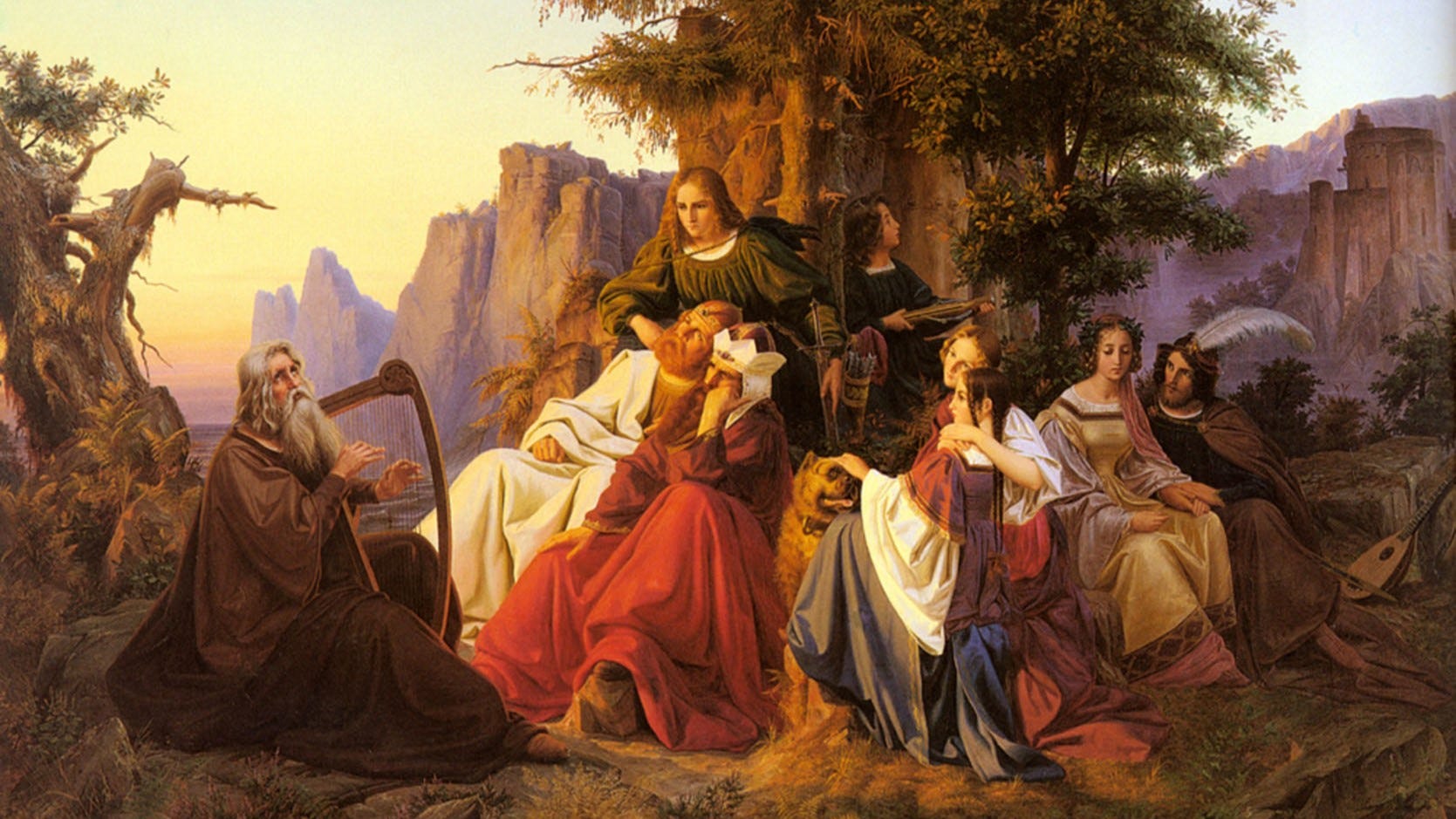
Thematically, the film is made to resonate more with our modern sensibilities. Unlike the Odysseus in Homer’s poem, who is defined by hubris and portrayed as a triumphant hero, this version is consumed by guilt over violating humanity’s golden rule. That fundamental ethical principle, which remains especially relevant today, becomes the narrative and moral centerpiece.
Nolan also grounds the mythology in reality by presenting the gods not as fantastical beings that they interact with, but as part of Odysseus and his civilization’s understanding of the world. For Odysseus and his men, a storm, a prophecy, a curse, or divine intervention could all be interpreted as part of the natural order of things.
Ludwig Göransson delivers his finest work, a score that grows with every listen, becoming inseparable from the images and emotions of the film. The editing, however, leaves a lot to be desired because despite the tall order of maintaining pace throughout its length and nonlinear structure, it often prioritizes momentum over allowing moments to breathe, not giving the audience ample time to brace before the impact. Providentially, the second half feels less jarring and overcut.
As expected from an all-star roster, the performances here are rich, with veteran actors like Anne Hathaway, Robert Pattinson, and Samantha Morton at their best, while this could arguably be Matt Damon’s best late-career effort. Some performances, however, are inevitably overshadowed.

In a way, this is my personal cinematic odyssey too; Christopher Nolan was one of the first contemporary directors who introduced me to a more serious approach to filmmaking, eventually deepening my appreciation for the art. I was fifteen when I saw The Dark Knight on the big screen, the first movie ticket I bought with my own cash. Technically, it was my parents’ money, but I saved up my lunch allowance to afford the ticket. Memento is the oldest review I’ve written on my IMDb account, created during my late high school years. Interstellar was my first IMAX 70mm experience. And now, The Odyssey, the first film that demanded a second viewing in IMAX. I would’ve loved to see it as intended, in the 18K resolution of the 70mm film print, but I had to settle for the best option available in my country. It’s only because I care about the experience and the presentation.
But what happens right after you leave the cinemas? You go back to your own stories, your own little life, and your own little struggles. You continue taking actions you know won’t echo through eternity. What you’ve just witnessed is a retelling of a poem that has existed close to three millennia. It was first passed down as a song, then as a written text, and thousands of years later as civilization continues to take massive leaps of progress, we are handing it down to the next generation through moving pictures on a screen.
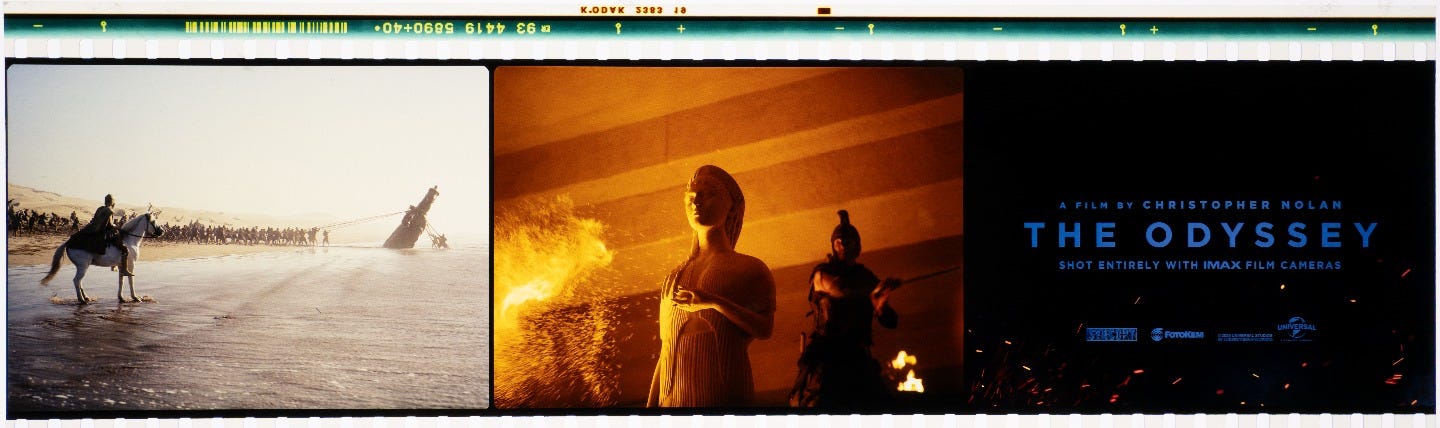
Filmmaking itself is just over a century old, still a relatively young art form. Yet it is another human invention that attempts to preserve humanity’s stories, emotions, and experiences. Compared to ideas, stories, beliefs, and the mediums through which we communicate them, our individual lives are just a tiny blip in the vast expanse of time.
Maybe our core struggle is longing for the stories we tell and the actions we take to outlive us. Why is there an idea of heaven, of life beyond death, of immortality? Death is such a tragic fact of life, a deeply terrifying concept that we are driven to create legacies or conceive explanations to help us cope. Is being remembered the closest thing we have to immortality?
That is why a life devoid of meaningful work, the agency to create, or someone to share it with is an agonizing existence. We seek remembrance through creation, contribution, and relationships. Without them, life feels unlived. That’s why we write words, capture photographs, and chase love that transcends time.